Sigma SA lenses
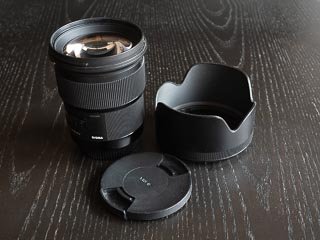
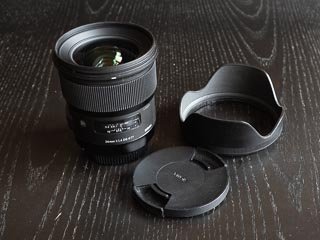
Sigma launched the SA lens mount in 1993 with the SA-300 35mm film SLR. The last cameras to use this lens mount were the SD Quattro and SD Quattro H (which I often refer to as the SDQH) cameras in 2016. By 2019 Sigma had fully moved over to making mirrorless cameras with conventional Bayer sensors and they used the mirrorless L mount for the Sigma FP camera launched in 2019. But if you happen to own any of Sigmas DSLRs, or 2016's mirrorless SD Quattro and SD Quattro H cameras, you need to find lenses in the now discontinued and rather rare SA mount.
The main motivation behind this section is to talk about how well the various Sigma SA mount lenses I own work on my SDQH, my much older much older Sigma SD14 DSLR, and my full-frame Sony A7R III camera via a recently acquired the Sigma MC-11 adapter which allows me to mount my Sigma SA lenses with full functionality, including auto focus. There are a number of general issues that apply to all the lenses I'll be talking about in this section, so I'll talk about those things here:
- Sigma's "Global Vision" strategy
- Sigmas very first lens in their new Global Vision line of lenses was the Sigma 35mm F/1.4 DG HSM Art 012 in 2012. This lens marked Sigma desire to challenge the world's very best lenses, both in terms of both optical and build quality, and move into the top ranks of the world's lens manufacturers. And Sigma, to a large extent, did just that. Sigma divided their Global Vision lenses into three categories: "Art" (creative excellence), "Contemporary" (compact and versatile) and "Sport" (action and reach).
- Sigma HSM focusing motor
- Sigma's HSM focusing motor is used in all their Global Vision lenses. Is is a modern and silent focusing motor very similar to Canon's "USM" or Nikon "SWM" focusing motors. Sigma first introduced the HSM motor back in 1997, but Sigma's official position is that only Global Vision lenses should be used on the SQ Quattro cameras. In my experience, however, Sigma's older lenses also work well too, so long as they have the 'HSM' focus motor.
- Full-frame and APS-C lenses
- Like most lens manufacturers, Sigma's lens names are a bit (OK, a lot!!) of an incomprehensible alphabet soup. But amongst the most important of these letter codes are 'DG' and DC'. From the earliest days of digital SLRs Sigma have used the letters 'DG' in lens names to indicate lenses optimised for full-frame cameras, and 'DC' to indicate lenses optimised for APS-C cameras. But the SDQH has an APS-H sensor, so it's a bit bigger then the sensor in APS-C cameras and a fair bit smaller than a full frame sensor. Sigma very much encouraged SDQH users towards full-frame lenses, so the very first lens I bought with my SDQH was the Sigma 50mm F/1.4 DG HSM Art 014 lens. But it turns out the the APS-H sensor in the SDQH (which is a wee bit smaller than the sensor in most other APS-H cameras) falls within the imaging circle of many of Sigmas 'DC' lenses. I have experience of the Sigma 17-70 mm f/2.8-4 DC Macro OS HSM and Sigma 30mm F/1.4 DC HSM - Art 013 lenses (articles on the way!), and although there is a some vignetting on the SDQH, particularly with the 17-70mm zoom, I would regard both lenses as very usable on the SDQH.
- SLR and mirrorless lenses
- The Sigma SA mount is an SLR mount, which means that SA mount lenses tend to be rather larger than mirrorless lenses. Another important letter code in Sigma lens names is 'DN' which is used to indicate a lens that was designed from the very beginning as a mirrorless lens. Any Sigma lens that doesn't have 'DN' in its name was originally designed for SLRs even if it has a mirrorless lens mount. In the early days of mirrorless cameras Sigma introduced versions of old SLR lenses in mirrorless lens mounts. For example the Sigma 50mm F/1.4 DG HSM Art 014 lens is available in L mount and Sony E mount but even in those mounts you won't find 'DN' in the lens name which tells you it is just an adapted SLR lens.
So keep an eye on this page as I add new articles, starting with the Sigma 50mm F/1.4 DG HSM - Art 014 lens.