Fujifilm Finepix 4900 Zoom

Introduction
| Announced | August 2000 |
|---|---|
| Camera type | Bridge camera with EVF |
| Camera size | 110 x 79 x 94 mm 450 grams (inc. battery) |
| Sensor type | SuperCCD |
| Sensor size | 1/1.7" (7.44 x 5.58 mm) |
| Resolution | 2400 x 1800 (i.e. 4.3mp files interpolated from a 2.4mp SuperCCD sensor) |
| Memory card | SmartMedia |
| Battery | NP-80 |
| Lens | 7.8 - 46.8mm f/2.8-3.1 (full-frame equiv. 35-210 mm, 6x zoom ratio) |
If you just want to see some photographs, skip straight to the results section.
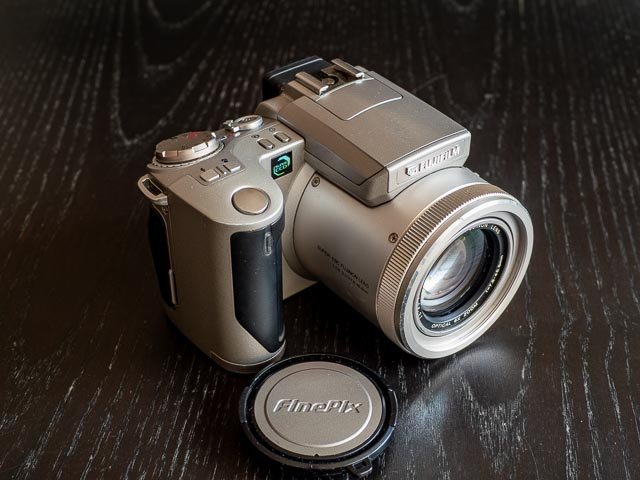
The Fujifilm Finepix 4900 Zoom (I'll refer to it as the 4900 from here on) is an early example of what would become known as a "bridge" camera, i.e. digicams with powerful zooms that would provide some of the handling, manual controls and lens versatility of a fully fledge DSLR in a much smaller, and most importantly much cheaper, package.
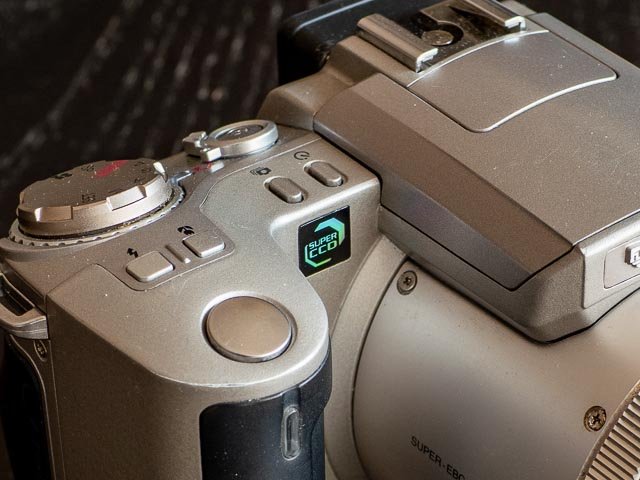
It is also the first consumer "digicam" (which I define as a digital camera with a small sensor and a non-interchangeable lens) that I have used with what Fujifilm call a "SuperCCD" sensor. This is essentially a normal CCD sensor with the pixels arranged in a honeycomb pattern rather than the normal rectangular grid pattern. Filling in the gaps between the pixels in this honeycomb pattern requires interpolation which results in a final JPEG file that has a much higher pixel resolution than the sensor itself. So the 4900 produces 4.3 megapixel JPEG files from a 2.4 megapixel sensor. Fujifilm claimed that this extra resolution really did result in an increased ability to resolve real world detail. While the world debated the real extent of this increase in detail resolution, even Fujifilm realised they had perhaps lost the argument, at least to the extent that in later marketing they stopped quoting the pixel resolution of the JPEG files without also quoting the real pixel resolution of the sensor. (You can read more about Fujifilm's SuperCCD sensors in my articles on the Fujifilm FinePix S2 Pro and Fujifilm FinePix S5 Pro DSLR cameras.)
But the real reason I added this camera to my collection is that it is also a very early example of a camera that used an electronic eye-level viewfinder According to the DPReview of this camer it was Fujifilm who came up with the acronym usually used for this kind of viewfinder: EVF (the 'E' stands for electronic rather than eye-level).
With the unrelenting rise of the "mirrorless" camera over the last 10-15 years the electronic variety of eye-level viewfinder has become by far the most common type. But when was the first ever digital camera to use an EVF launched? This is actually quite a difficult question to answer. Part of the problem is that the DPReview camera database (normally a very useful tool for researching vintage digital cameras) reports many early digicams that actually had optical SLR viewfinders as having an electronic viewfinder. One example is the Sony Cyber-shot DSC-D700 (announced in September 1998). Check out the specification page for the Sony Cyber-shot DSC-D700 and it says the viewfinder is electronic. But read the full review for the DSC-D700 on the same website and you'll see that this was in fact a proper DSLR with an optical TTL viewfinder, despite its "digicam" sized sensor. Digicams with optical SLR viewfinders were actually quite common in the early days of digital cameras. Other examples of this camera type you can read about on this website include the Olympus Camedia C-1400L, Olympus Camedia C-2500L (Olympus was the king of this type of camera!) and Pentax EI-2000 .
The earliest EVF camera in the DPReview camera database I can find that I can really confirm as electronic and not optical is another Sony, the Sony Mavica FD-95 announced in February 2000. So while the 4900 is definitely not the first camera with an EVF, it was announced just a few short months after the Sony Mavica FD-95 in August 2000. So not the first, but definitely a very early example of the species!
I remember for many years declaring with absolute certainty that I would never ever get a camera with an EVF!  Of course now I speak as a confirmed mirrorless camera user, so sometimes it really is just a case of waiting for technology to catch up with what was actually a bloody good idea! But that left me thinking: what were these first generation EVFs really like to use… read on to find out…
Buying a Fujifilm Finepix 4900 Zoom in 2026
This really doesn't seem to be a particularly sort after camera, so I only had to pay £18 for mine in pretty nice condition from a "Buy it now" listing. (Because the focussing ring wasn't working on my camera the seller was kind enough to give me a partial refund, so this is the price I would have paid had the camera been fully functional.) But the battery wasn't able to hold enough charge for anything more than a couple of shots, so I also needed to spend £13 on a new NP-80 battery for a total outlay of £31.
My WL-FX9 wide-angle converter, complete with the AR-FX9 adapter ring needed to mount it on the camera, cost £9.
Fujifilm Finepix 4900 Zoom body tour
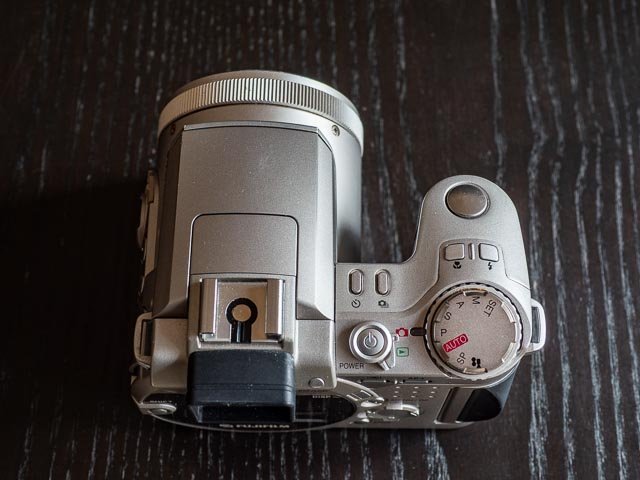 The 4900 may be a very early example of a bridge camera, but it is amazing how much of this camera would be familiar to the user of any modern bridge camera. Starting at the left hand side (while using the camera) there is the aforementioned EVF. Above it there is a simple hot shoe with not dedicated flash contacts and the it's right there is a button for switching between using the EVF and rear monitor for composing your photographs. On top of the EVF is the pop-up electronic flash.
Continuing to the right you can see a power button surrounded by a dial for switching between record and playback modes. And next is the mode dial wich includes positions for recording video (320x240 pixels, 10FPS and a maximum record time of 160 seconds, so no, you won't be shooting the next blockbuster movie on this thing!) and accessing the settings menu. As was common on pretty much all digicams of this era there are discrete modes for recording images, playing them back and adjusting settings, so you can't just hald press the shutter button to return to shotting mode. Surrounding the mode dail is the camera's command dial. Moving towards the front of the camera you can see buttons for the self timer, drive mode, macro mode and flash mode (you press each button multiple times to cycle though the available options). Of finally, at the front of the grip, there is the shutter button.
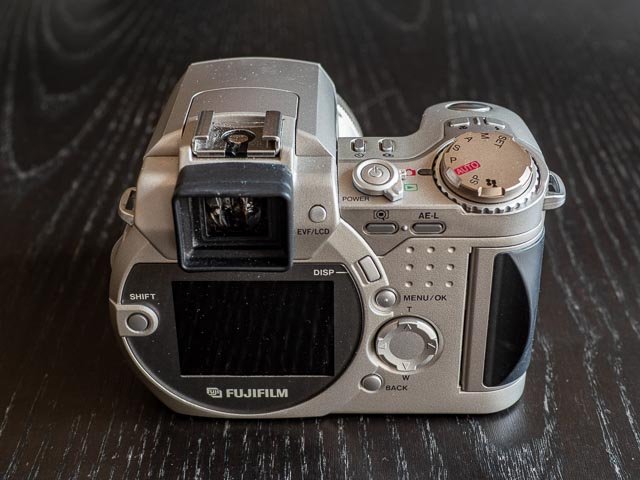 On the back of the camera you will of course find the rear monitor. The mysterious "Shift" button to the left of the monitor isn't one I ever had reason to use! But according to the instruction manual you use to adjust the monitor brightness or move around a zoomed in image in playback mode, both in conjunction with the four way controller which sits to the right of the rear monitor along with Menu/OK and Back buttons to help with navigating though the menus. In shooting mode you hit that Menu/OK button to enter a simple menu of photographic settings for things such as flash exposure compensation, white balance, metering mode (Fujifilm calls this "photometry"), ISO (from 125 to 800), Auto bracketing (fancy!) and sharpness. To the upper right of the rear monitor is the "Disp" button which is used for setting various display modes, for example, enabling guidelines for the EVF/monitor. Finally, at the top of the back of the camera are two buttons: the left one if the focus check button (you use this in manual focus mode to enlarge the central portion of the screen to focus) and the right one exposure lock button.
On the left hand side of the camera there are quite a few more controls, including the main zoom control, the auto/manual focus switch, an exposure compensation button and a white balance button. The last button is the Info button which displays a useful summary of photographic settings like ISO, white balance, metering mode etc. Finally on the left side is a door that covers the USB, video out and DC in ports. On the right hand side of the camera you'll find the door for the memory card compartment which has one slit for SmartMedia memory cards (the largest 128mb SmartMedia cards work fine), a tripod bush (not aligned with the lens, unfortunately) and the battery compartment for the rather small NP-80 batteries.
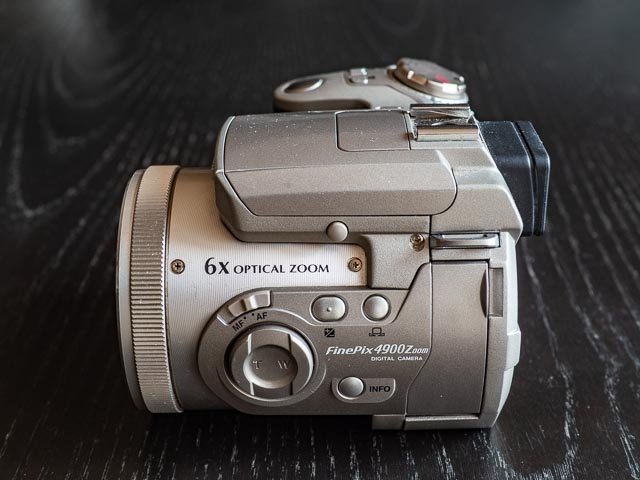
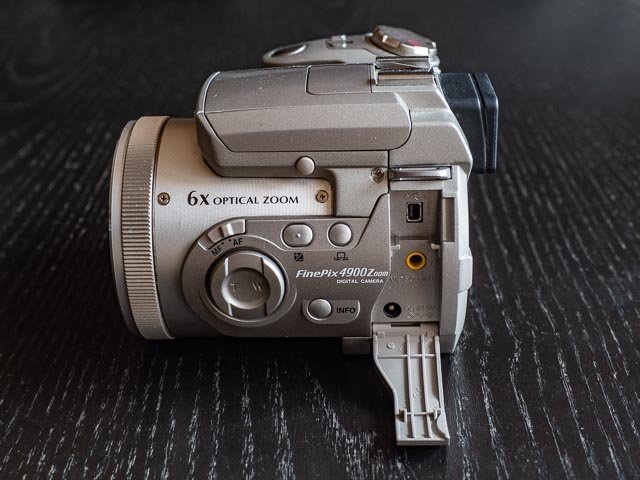 On the left hand side of the camera there are quite a few more controls, including the main zoom control, the auto/manual focus switch, an exposure compensation button and a white balance button. On the housing for the EVF/built-in flash there is a button for popping up the flash. The last button is the Info button which displays a useful summary of photographic settings like ISO, white balance, metering mode etc. At the end of the lens is an electronic focus ring used in manual focus mode. Finally on the left side is a door that covers the USB, video out and DC in ports.
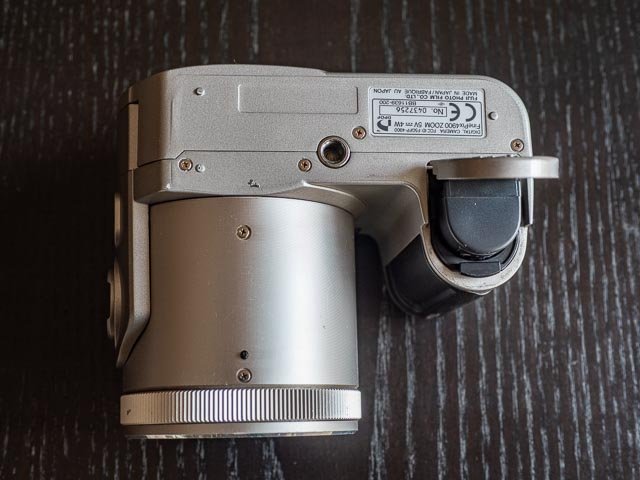
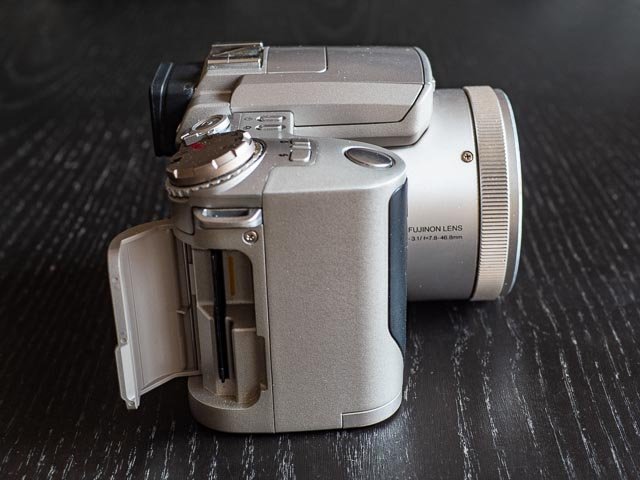 On the right hand side of the camera you'll find the door for the memory card compartment which has one slit for SmartMedia memory cards (the largest 128mb SmartMedia cards work fine), a tripod bush (not aligned with the lens, unfortunately) and the battery compartment for the rather small NP-80 batteries.
Fujifilm Finepix 4900 Zoom in use
As you'd expect, this camera is very much a product of its time, and as a camera from over a quater of a century ago it's pretty slow: expect start-up and shut down times of 3-4 seconds, JPEG (there is no RAW mode) shot-to-shot times of 1-2 seconds (most of which is the time taken to acquire focus) until you fill up the buffer with up to 5 images, then there's a 15-20 second wait for the buffer to clear and all the images to write to the memory card. Then there's that tiny NP-80 battery which even Fujifilm themselves only claims will last 100 images, and in reality, particularly with an old battery, it's more like 40-50 images. And because the battery that keeps the date and time between changes has long since run flat (and I have been able to find any way to change it) you have to factor in the time to set up the date and time every time you change batteries too.
The handling of the 4900 is actually quite nice. The small size makes it a little cramped, but the controls are well positionsed and the DSLR-like command dial around the mode dial is really nice to have. This camera maybe a bit smaller than is totally comfortable for my average sized man-hands, but the small size also makes it light weight and easy to carry around.
But the question I set at the beginning of this article was; what is this very early example of an EVF like to use? Hmm… I have somewhat mixed feelings! The thing is that the advantages over the simple tunnel type optical viewfinder you can on most digicams from the 4900's era are clear and real! You get accurate framing regardless of distance between you and the subject or the focal length, together with all the information you need (shutter speed, aperture etc), and you get all this regardless of the amount of sunshine, something that can quickly wash out the rear monitor of pretty much any camera, vintage or modern.
On the other hand the resolution is so low that all it really gives you is an idea of rough idea of composition… I really don't recommend even trying to manually focus, even with the previously mentioned focus check button to enlarge the central portion of the viewfinder image. (Actually the focussing ring on my example doesn't actually work, so manual focussing wasn't even an option for me.)
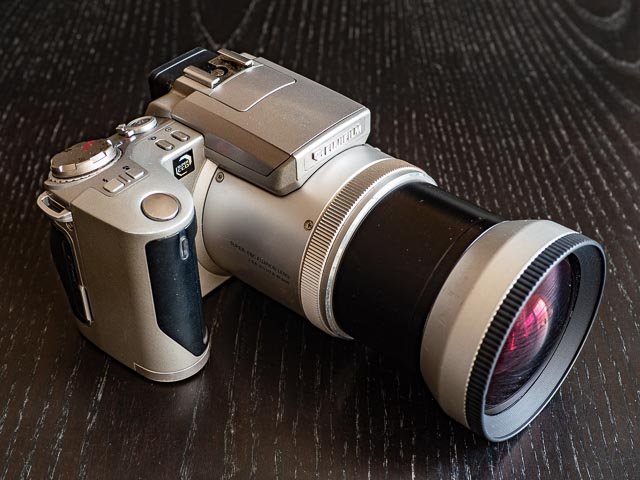 One nice advantage of the 4900 is the good range of accessories Fujifilm made for it. Fujifilm made both 0.8x wide angle (the WL-FX9) and 1.5x telephone converters (the TL-FX9), and the adapter you need to mount these converters on the camera (the AR-FX9) also allows 55mm filters to be used. I got the the WL-FX9 wide angle converter for my 4900 which gives you a full-frame equivalent focal length of 28mm. Unfortunately it wasn't really wide enough to be of much use!
As is pretty much always the case with these vintage digital cameras, I had a lot of fun using the 4900! I really enjoyed exploring the advantages and disadvantages of this very early EVF and on the whole I found the 4900 to be surprisingly pleasent to use, despite the pretty awful low-res EVF. What's more I was surprised by the actually rather lovely results from this camera, which brings us to…
Fujifilm Finepix 4900 Zoom results
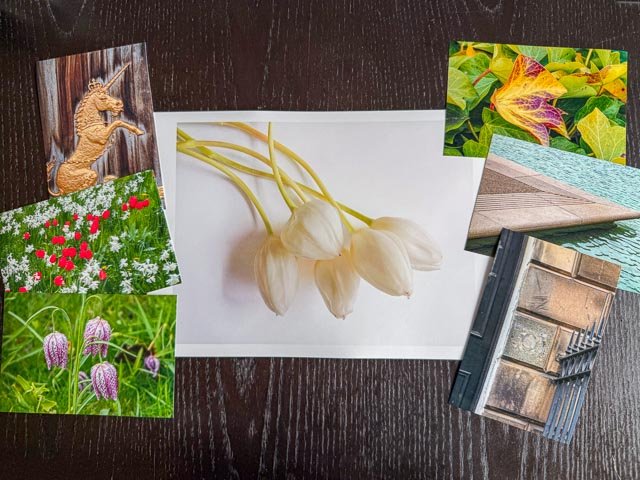 These early SuperCCD sensor cameras from Fujifilm tended to get rather mixed reviews for the image quality at the time, but when using a camera 25 years later for a bit of vintage digicam fun you have rather different criteria! And when I saw my first two images from this camera of the Tulips you can see below I was rather taken a back by the lovely subtle colours. I was even able to make pretty nice near-A4 sized prints, although perhaps the A4 prints didn't stand really close examination due to image noise in shadow areas, though I may have been able to improve this somewhat with more care in Adobe Lightroom. But without such close examination they looked beautiful, and the 150x100mm "enprints" (as we used to call them!) were really lovely.
I was also very pleased with the "in-the-field" images I shot on the 4900. Even though I pretend I actually like like these early EVFs, if I'd bought this camera back in 2000 I think I'd've been very happy with the results. It's certainly not impossible to imagine using the 4900 for some genuinely creative photography… it really isn't just a snap-shot camera.
All these images were shot at ISO 200 (I should've set ISO to the lowest value of 125, but there is no clear indication of what the ISO setting is without hitting that Info button on the side of the lens, so I failed to notice I was shooting at ISO 200!) with image quality set to highest quality possible JPEGs, and as always were lightly processed to taste in Adobe Lightroom.
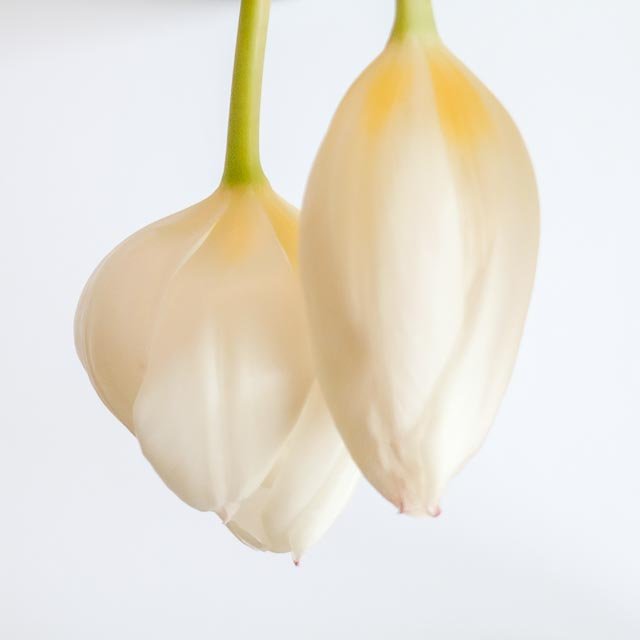
Focal length: 21.8mm (full-frame equiv. 98mm)

Focal length: 7.8mm (full-frame equiv. 35mm)
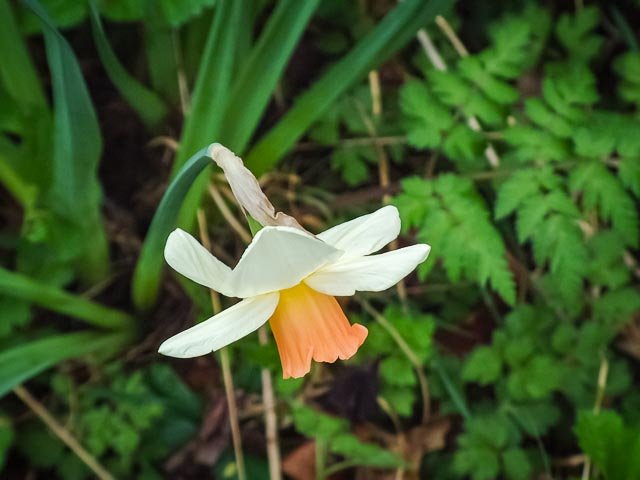
Focal length: 46.8mm (full-frame equiv. 210mm)
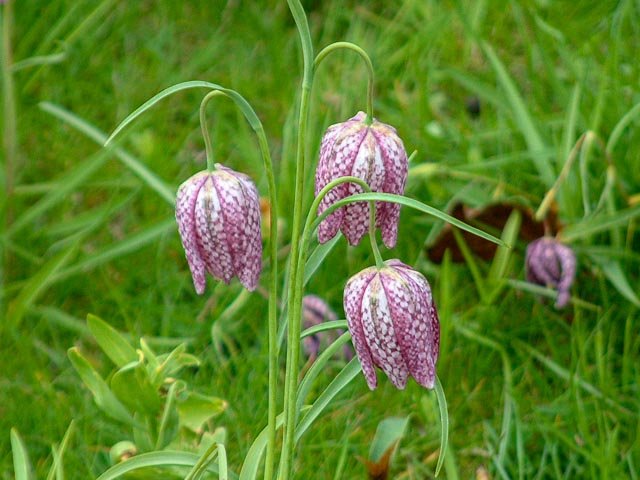
Focal length: 46.8mm (full-frame equiv. 210mm)

Focal length: 26.1mm (full-frame equiv. 117mm)
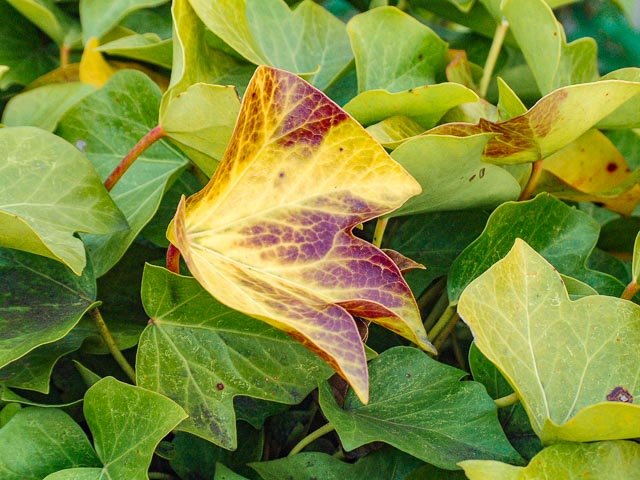
Focal length: 21.8mm (full-frame equiv. 98mm)

Focal length: 46.8mm (full-frame equiv. 210mm)
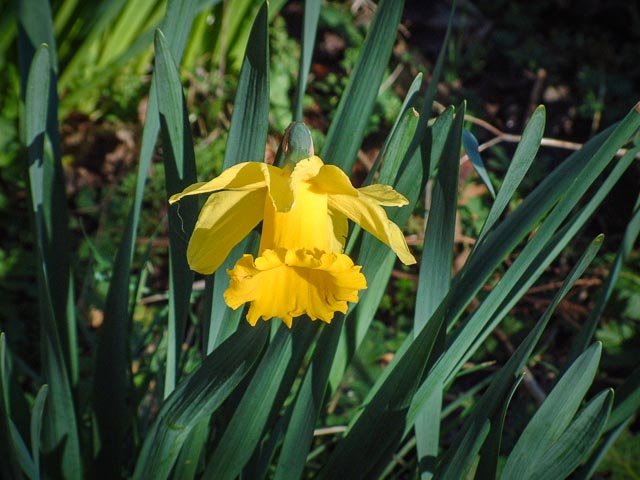
Focal length: 37.5mm (full-frame equiv. 168mm)
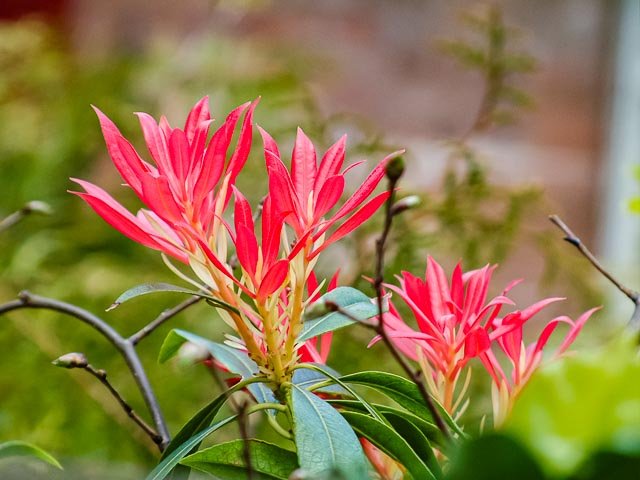
Focal length: 46.8mm (full-frame equiv. 210mm)

Focal length: 26.1mm (full-frame equiv. 117mm)

Focal length: 37.5mm (full-frame equiv. 168mm)
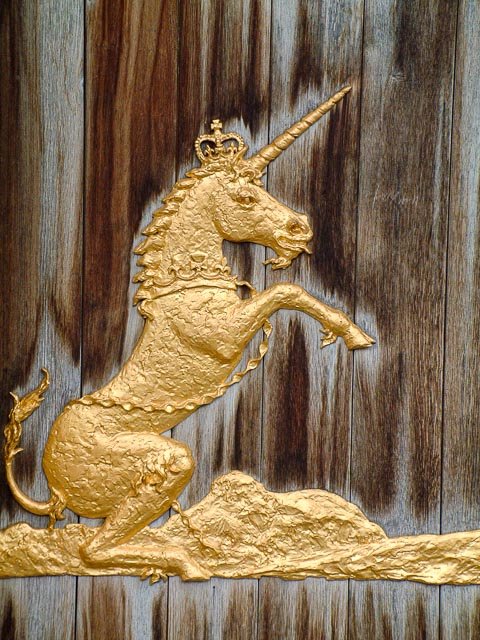
Focal length: 26.1mm (full-frame equiv. 117mm)
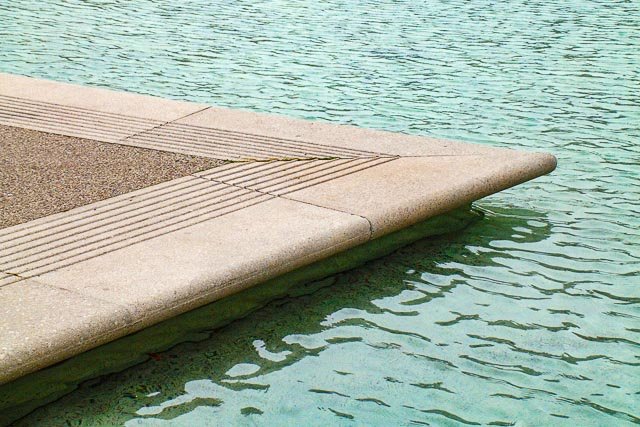
Focal length: 19.9mm (full-frame equiv. 89mm)

Focal length: 46.8mm (full-frame equiv. 210mm)

Focal length: 46.8mm (full-frame equiv. 210mm)
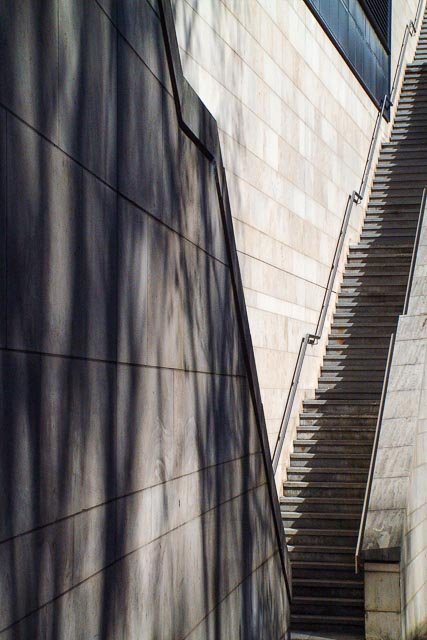
Focal length: 19.9mm (full-frame equiv. 89mm)

Focal length: 13.9mm (full-frame equiv. 62mm)
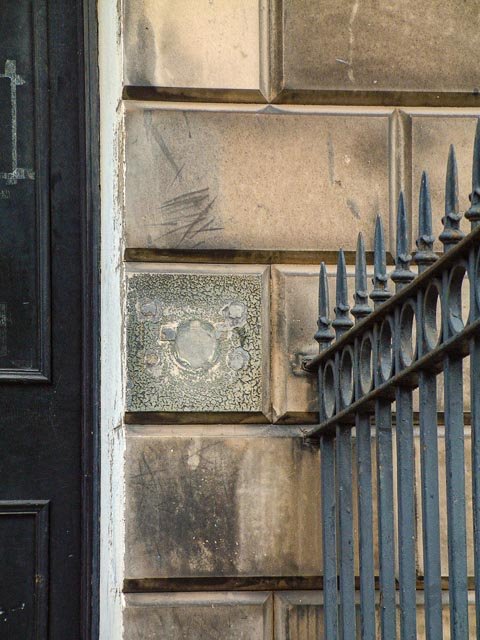
Focal length: 26.1mm (full-frame equiv. 117mm)

Focal length: 7.8mm (full-frame equiv. 35mm)
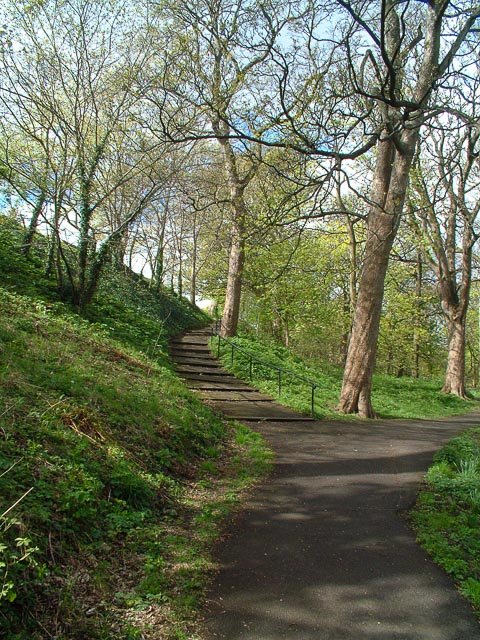
Focal length: 7.8mm (with Fujifilm WL-FX9 0.79x wide angle lens, full-frame equiv. 28mm)
Fujifilm Finepix 4900 Zoom conclusion
I had a huge amount of fun with the 4900 and I was surprised by just how beautiful the results were. So if you want a taste of vintage digital photography with a very early EVF camera that will allow you to do some genuinely creative photography without breaking the bank (assuming you don't consider around £30 including the cost of a new battery breaking the bank!) I can definitely recommend this camera.